Home Shop Cart Shop the range

Takes things out, then puts minerals back in

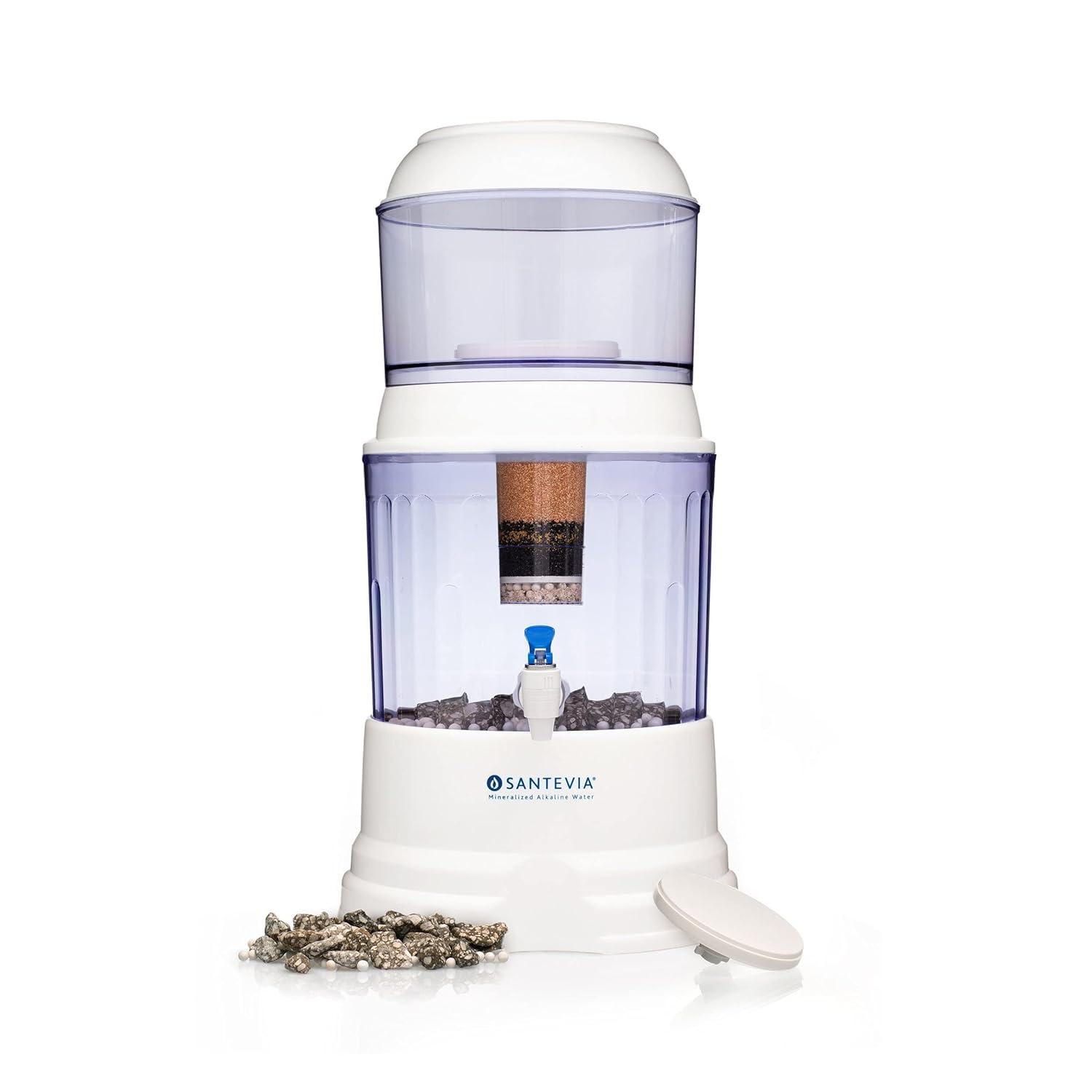
A 10-litre countertop system that filters through granular activated carbon and then passes the water over a mineral stage on its way to the tap.

Reduces chlorine, fluoride and lead, adds calcium, magnesium and potassium back, and raises pH by up to 2 units — all without plumbing, power or a single cable.

£219 inc. VAT
Fast, FREE UK delivery on all orders £40 or more. Orders under £40 pay a flat £3.99 delivery.

A two-stage gravity system: filtration first, then a mineral stage before the tap. Reduces chlorine, fluoride and lead; adds calcium, magnesium and potassium back.

Secure CheckoutCard details never touch our servers
Honest AdviceAsk us anything before you buy
Free ShippingMinimum spend required
Easy ReturnsHassle free returns & refunds
Fluoride reductionOne of the few gravity systems that specifically targets fluoride.
Minerals added backCalcium, magnesium and potassium reintroduced after filtration.
Raises pHLifts the pH of the finished water by up to 2 units.
Completely off-gridNo power, no plumbing, no cartridge indicator to run out of battery.

Santevia Gravity Water System 10L

The Santevia is the most unusual thing in this catalogue, and the most expensive way to filter water without electricity. It is a tall two-chamber gravity system, 61 cm from worktop to lid, holding 10 litres. Water goes in the top, works down through the filtration stack under its own weight, and comes out of a tap at the base.

Where it differs from every other gravity filter here is the second half of its process. Granular activated carbon does the reduction — chlorine, fluoride and lead among them — and then the water passes over a mineral stage that reintroduces calcium, magnesium and potassium. Santevia state this raises the pH of the finished water by up to 2 units.

That two-step approach is the whole proposition. Ordinary carbon filtration is subtractive: it takes chlorine out and leaves whatever else was dissolved in the water. Reverse osmosis is aggressively subtractive, stripping nearly everything and, in the process, the mineral content that gives water body and flavour. The Santevia is deliberately additive at the end, which produces water with a distinctly soft, rounded taste that people either strongly prefer or find slightly odd.

Fluoride reduction deserves a note, because it is genuinely uncommon in this format. Roughly one in ten people in the UK receive artificially fluoridated water, mostly in parts of the West Midlands and the north east; elsewhere fluoride occurs naturally at varying levels. If reducing it matters to you, very few gravity systems address it at all. We are describing what the product does, not making a recommendation about fluoride itself.

Specifications

Capacity10 litres (2.6 gallons)
Dimensions30.5 x 30.5 x 61 cm
Filter mediaGranular activated carbon plus a mineral stage
ReducesChlorine, fluoride, lead
AddsCalcium, magnesium, potassium
pH effectRaises pH by up to 2 units
PowerNone — gravity fed
PlumbingNone required
MaterialsBPA and BPS-free SAN plastic
Weight4.5 kg empty

Santevia Gravity Water System 10L

£219 inc. VAT

Free UK delivery · easy returns · secure checkout

Frequently Asked Questions

Why is it so much more expensive than the other gravity filters?

It is doing more, and it is much larger. A basic gravity jug is one carbon cartridge in a plastic vessel. This is a 10-litre two-chamber system with a multi-stage stack that reduces fluoride and lead and then remineralises the output. Whether that is worth four times the price of a jug depends entirely on whether you want the mineral stage and the fluoride reduction.

What does raising the pH actually do?

It makes the water less acidic, which changes how it tastes — most people describe the result as softer or smoother on the palate. We would rather stick to taste and composition than make claims about what pH does in the body, because the evidence there is contested.

How tall is it really?

61 cm, which is taller than the gap under most wall cupboards. Measure your worktop clearance before ordering. It also needs headroom above that to lift the lid off and refill it.

Does it need cartridges?

Yes — the filtration and mineral stages are consumables that need periodic replacement in line with Santevia's schedule for your usage and water quality. Being gravity fed only means it needs no power, not that it needs no maintenance.

How does it compare with reverse osmosis?

RO removes far more, including dissolved solids, and needs electricity and a drain or a tank. The Santevia removes less but adds minerals back and runs on gravity alone. If you want maximum reduction, look at the K19-HG. If you want filtered water with mineral content and no cables, this is the one.

Is delivery free?

Yes — comfortably over the £40 threshold. Dispatch within 1–2 working days, delivery typically 3–5.

Minerals in water, and what they do to how it tastes

6 min read Clean Water Filters

Ask people to describe good water and they say "clean", "crisp", or "it tastes of nothing". That last one is wrong, and it is the most interesting thing about water as a drink.

Water with nothing in it tastes bad

Distilled water — H₂O and essentially nothing else — is unpleasant. Most people describe it as flat, hollow, or vaguely metallic. It is not that it tastes of nothing; it is that the absence itself registers as a flavour, and not a good one.

What we recognise as the taste of water is the taste of its dissolved mineral content. Chiefly:

  • Calcium — gives body and a faint sweetness; too much reads as chalky.
  • Magnesium — adds a slight bitterness that provides definition.
  • Bicarbonate — softens and rounds, taking sharp edges off.
  • Sodium — in small amounts, enhances everything else, as in food.
  • Potassium — subtle, slightly sweet.

This is why bottled mineral waters taste noticeably different from one another despite being, chemically, almost entirely the same substance. The differences sit in the last fraction of a percent.

The subtractive problem

Every filter is subtractive by nature. The question is what it takes out along with the thing you wanted gone.

Carbon filtration is fairly targeted. It adsorbs chlorine and organic compounds and leaves dissolved minerals largely alone, which is why a carbon-filtered glass still tastes like water — better water, but recognisably the same stuff.

Ion exchange deliberately removes calcium and magnesium, which is the point when you are fighting limescale, but it does change the taste. Softened water tastes cleaner and, to some palates, slightly blank.

Reverse osmosis removes almost everything. That is its purpose and its strength, but water straight from an RO membrane has very low mineral content and tastes correspondingly empty. This is exactly why serious RO systems — including the K19-HG in our range — add a remineralisation stage afterwards.

The additive approach

The Santevia takes a different route. It filters with granular activated carbon, targeting chlorine, fluoride and lead, and then routes the water over a mineral stage that adds calcium, magnesium and potassium back before it reaches the tap.

Two things follow from that. The finished water carries mineral content by design rather than by whatever survived filtration, and its pH rises by up to 2 units, which makes it less acidic and, to most palates, softer and rounder.

Whether you like it is a genuine matter of preference. People who find their tap water harsh usually take to it immediately. People who like a crisp, mineral, slightly hard glass of water sometimes find it too smooth.

A note on what we are not claiming

You will find a great deal written about mineralised and alkaline water and health. We are not going to add to it. The mineral content and pH shift here are measurable properties of the product that change how the water tastes, and that is the basis on which we are describing it. Anything beyond that is outside what we can stand behind.

Choosing on taste

If the goal is simply better-tasting tap water, the cheapest carbon filter here does most of the work — the Lucid jug at £24.99 removes the chlorine tang and leaves the minerals. The Santevia is for people who want a fuller intervention: fluoride and lead reduction, a mineral stage, ten litres at a time, and nothing plugged in.

Browse all countertop dispensers

Filtered water that still tastes of something

Ten litres, no cables, and a mineral stage that puts calcium and magnesium back.

Still deciding? Ask us a question and we'll help you choose.

Page summary

The Santevia Gravity Water System is a 10-litre countertop gravity filter sold by Clean Water Filters for £219. It filters through granular activated carbon, reducing chlorine, fluoride and lead, then passes water over a mineral stage that adds calcium, magnesium and potassium back and raises pH by up to 2 units. It measures 30.5 x 30.5 x 61 cm, weighs 4.5 kg empty, is made from BPA and BPS-free SAN plastic, and requires no plumbing or electricity.

Santevia Gravity Water System 10L £219